


We got the Men’s Burton Step On bindings on the Burton Family Tree Splitboard to test how they perform on the uphill and on the downhill.
This test was done to demonstrate the experience for our readers who are considering getting into the step on world and specifically considering the Burton option.
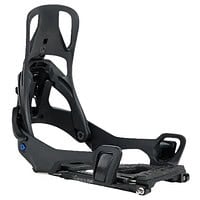
Where to buy Burton Step On Splitboard Bindings:
Scuba.com
Burton has finally developed a step in binding system for splitboards that actually works.
Less parts, less fuss. Burton has taken their already revolutionary Step On binding, and slapped it on Spark’s Tesla binding system, making the first step in splitboard binding system.
You’ll spend less time futzing around with your bindings and more time moving, after climbing uphill.
Not only do the Step On Splitboard Bindings feel secure on the downhill, but they feel right at home on the skin track. Thanks to two riser bar settings and Burton’s Forward Lean Adjuster (FLAD), the Step On Split Bindings let you fly uphill.
Things we like:
-
 Quick transitions
 -
No straps mean less futzing, and a lighter repair kit
-
Bindings come with spare Toe Hooks
-
Hi-back is quick and easy to adjust thanks to FLAD
-
Super clean, sleek-looking binding
-
Low profile means they store easily
Things we don't like:
-
 If your feet don’t like Burton boots, your S.O.L.
 -
Heavier than ski equivalent bindings
-
Wide profile in the toes could lead to tricky skinning in hard pack conditions
-
Riser bars are difficult to engage with poles
Where to buy Burton Step On Splitboard Bindings:
Scuba.com
- Type: Splitboarding
- Size: S/M/L
- Weight: Heavy
- Mounting System: Spark Tesla, Spark, Voile or Burton Pucks
- Adjustable High Back: Yes, Forward Lean Adjuster (FLAD)
- Features: Comes with spare toe pieces, two riser bar settings
Why Step On Splitboard Bindings?
For around $500, Burton’s Step On bindings for splitboards might seem steep. But, a steep hill can offer a bigger payoff. These also require Burton boots, but, again, the proposition put forth by Burton is that the overall performance and quality of the Step On system on a splitboard is compelling.
This review answers any questions about the value of the splitboard Step Ons, illustrated using experience while testing these bindings for men (read about women’s bindings).
How Step On Splitboard Bindings Work
The original K2 Clickers walked so that the Step Ons could run. Burton took the idea that was the step in binding, learned from past mistakes, and developed a foolproof system that is both simple and reliable.
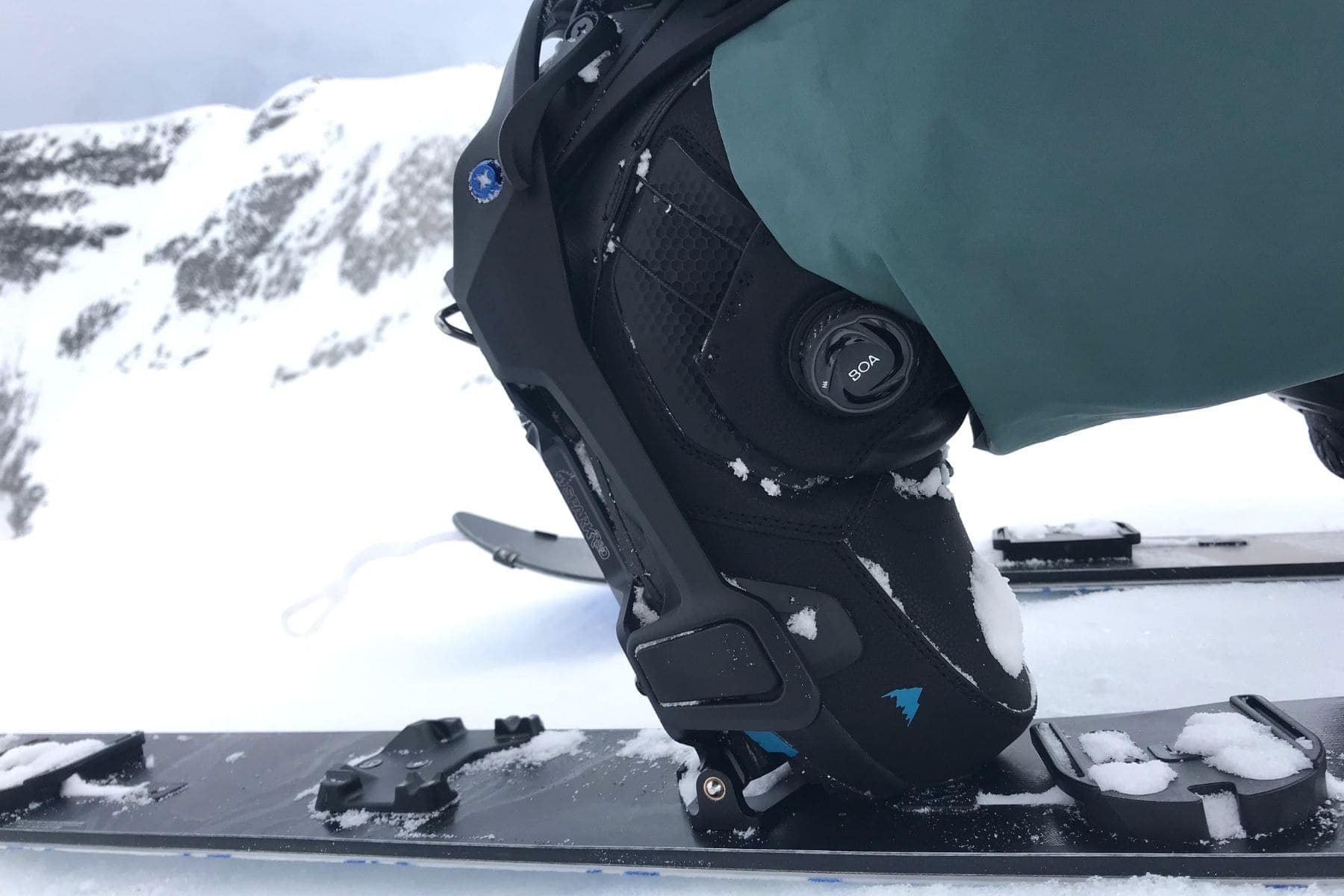
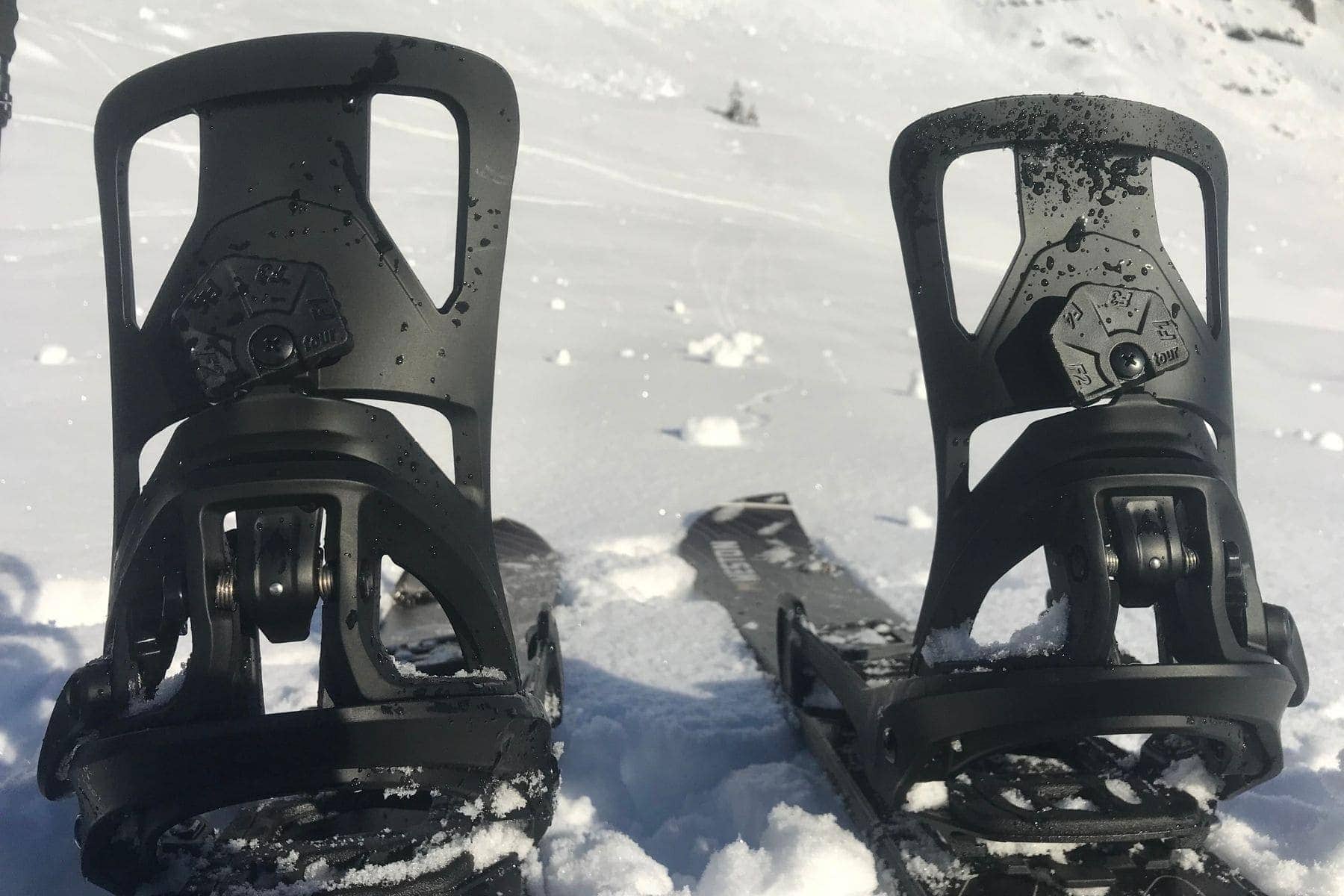
Five different FLAD settings allow you to hone in on your high backs angle, ranging from a neutral touring mode, to an aggressive riding stance, ensuring that you’ve got all your bases covered.
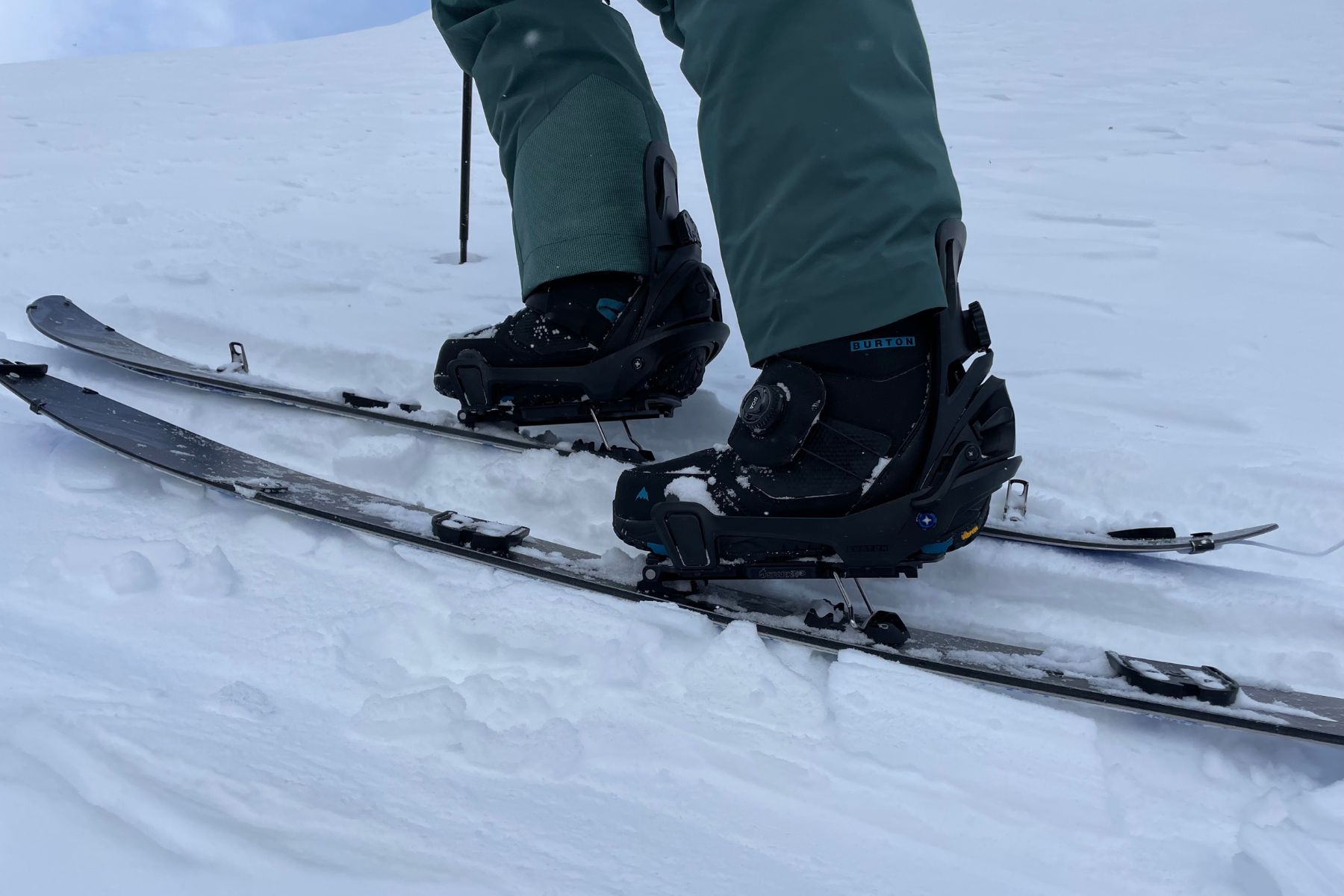
Using the same system as their standard Step On bindings, the splitboard version takes advantage of the same three-pronged attachment system. The bindings use a toe hook(s) and heel clip system, creating three contact points for a secure boot-to-binding interface.
To get out of the Step On Splitboard bindings, simply reach down and lift the lever located on the outer edge of the bindings. Once the heel clip is disengaged, twist your feet to disengage the toe cleats, and just like that, you’re free!
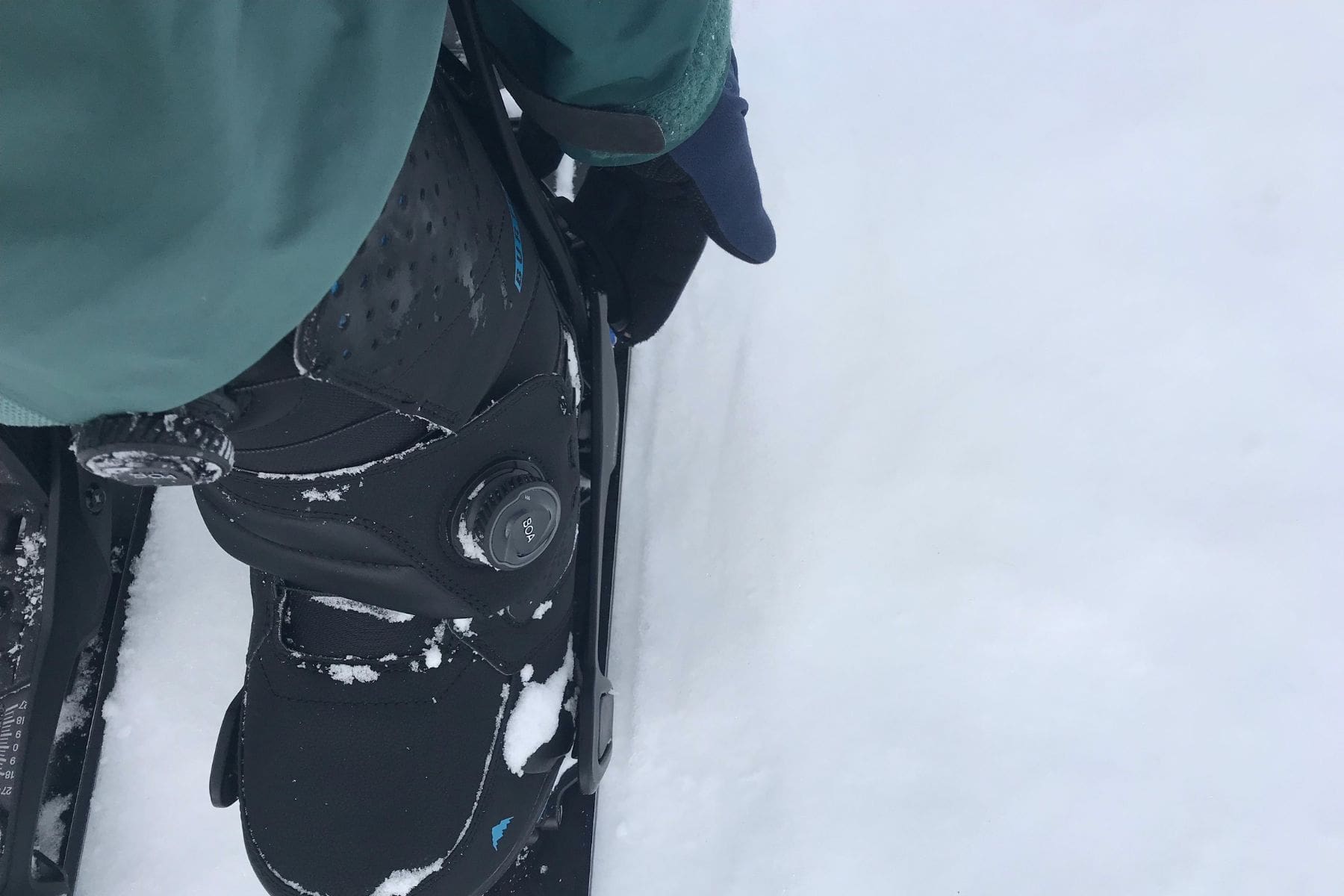
Quick Transitions
I won’t lie that I’ve been a skeptic of the Step On Bindings ever since they came out, but after a few longer days out on these splitboard step on bindings, I have to say that they’re pretty slick.
Just the novelty alone of being able to step in and go is good enough for me, but when you consider the utility that this provides, it’s hard to deny that these bindings shave off transition time.
Having used a number of different systems, hard boots included, these bindings are by and far the most efficient to use and require the least amount of fuss.
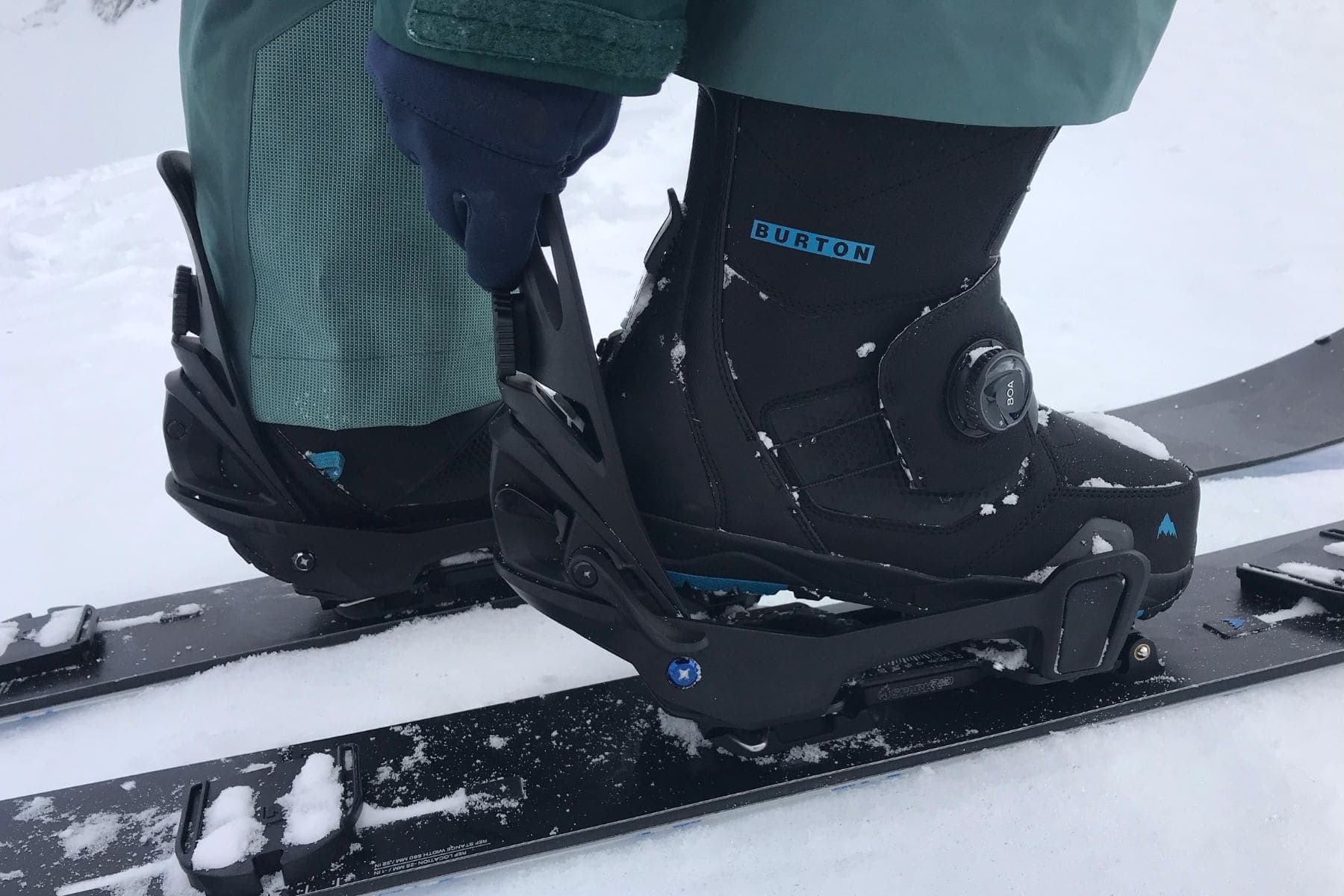
Compatibility
Thanks to Spark’s Tesla base plate, the Burton Step On Splitboard Bindings are compatible with any puck system i.e. Voile, Spark and Burton.
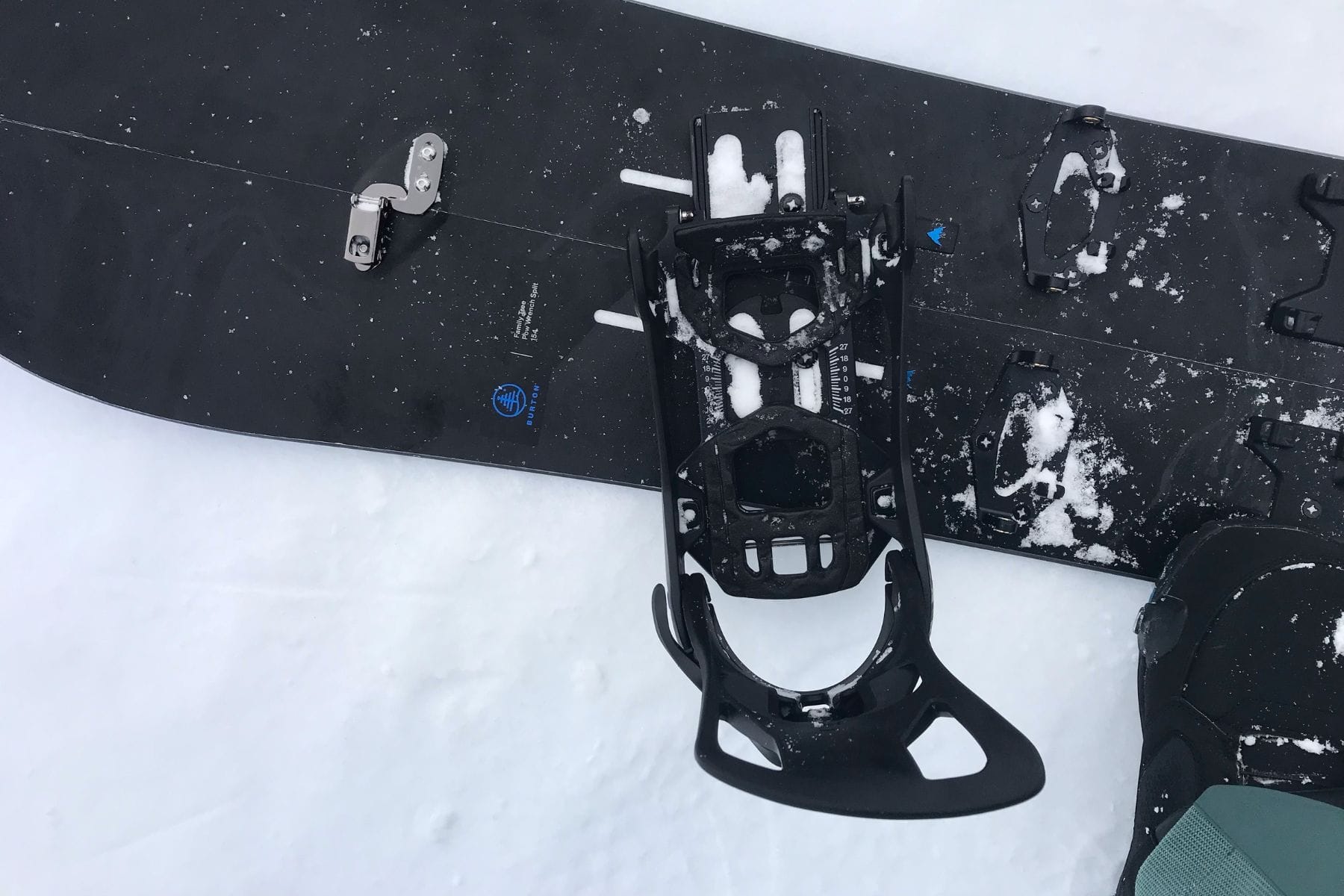
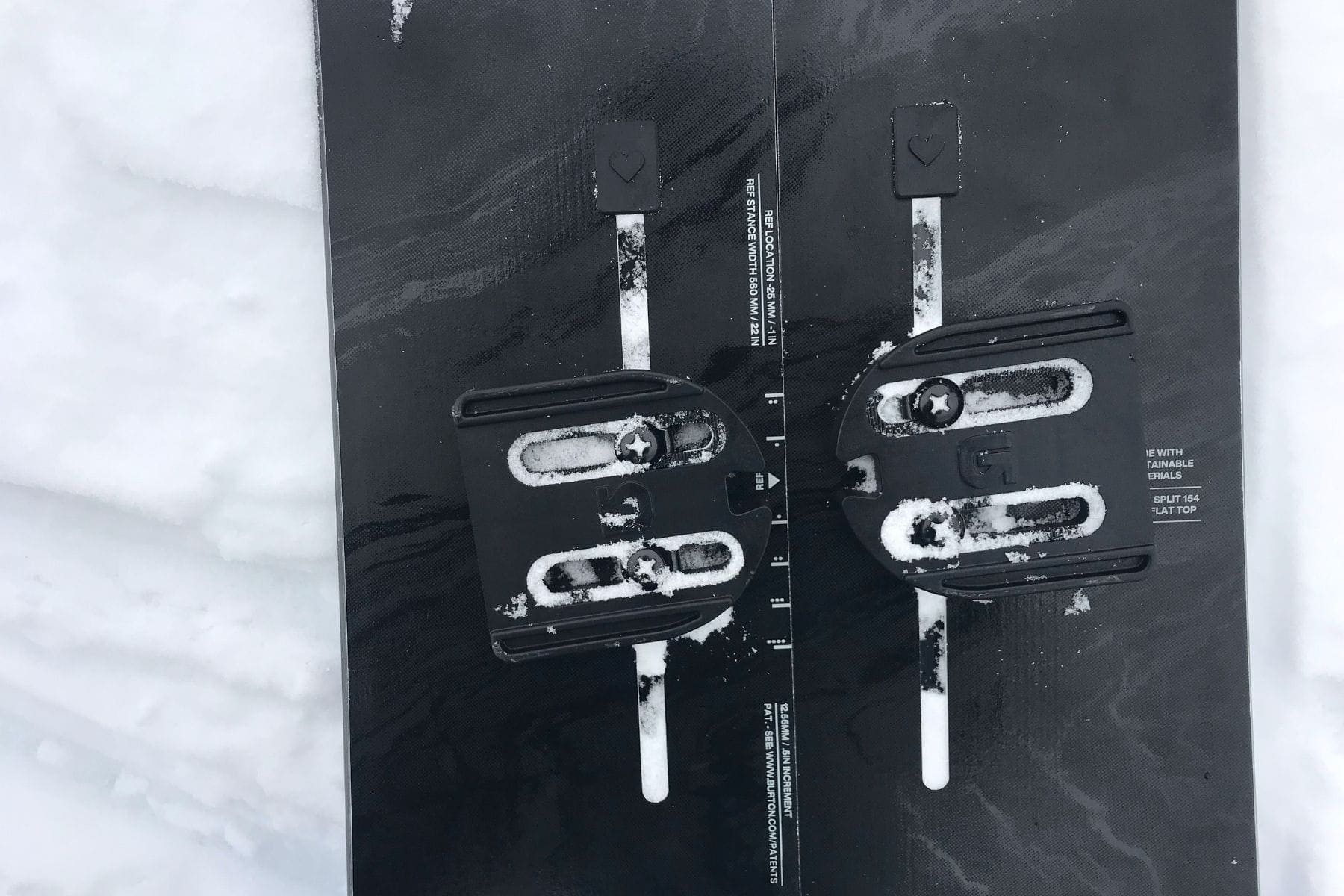
Even though they perform well on the other systems, these bindings truly excel on Burton’s Split Rail system.
The split rail system allows you to make small or large adjustments to the stance of your snowboard at the drop of a hat. Switching from goofy to regular or altering your binding’s angle by a degree is as simple as loosening the puck’s screws and making the desired adjustments.
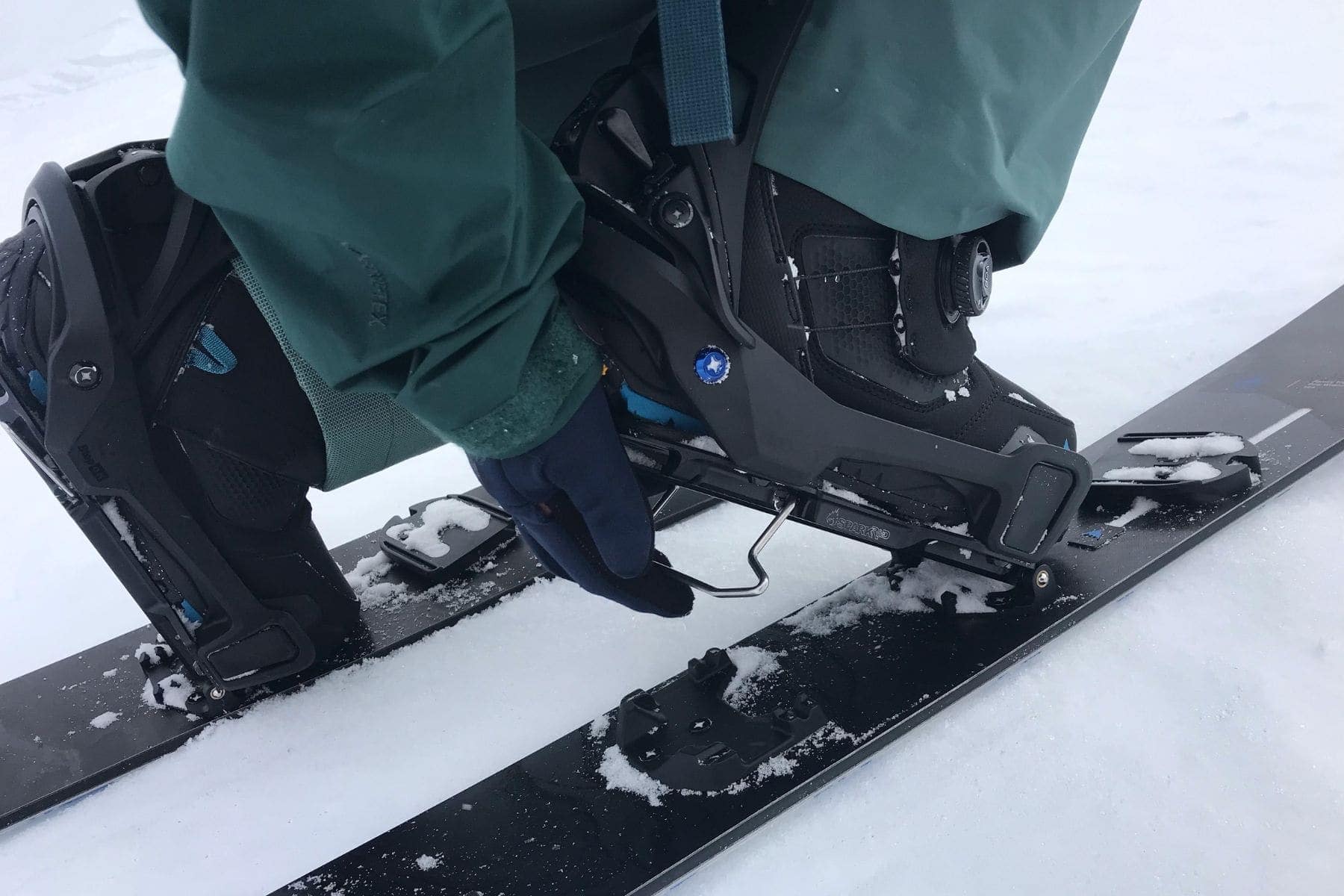
Because they use Spark’s very sound Tesla baseplate, they utilize the same touring brackets, heel rests, riser bars, and hardware as Spark R&D’s bindings.
Spark R&D is a household name for most snowboarders. Built on American soil with durability in mind, it’s easy to track down spare parts in damn near any ski town. This is good for those restless souls who want to surf the entirety of the earth and need a spare part or two when their equipment inevitably blows up.

Adjustability
Another plus to the Tesla system used in the Step On Split Bindings is that this baseplate is adjustable. Four screws on the bottom of the binding allow you to shift the binding forward or backward in relation to the baseplate, altering where the pivot point lies.
Riser bars are built into the baseplate, and while they are difficult to engage without bending down, it is possible to use a pole. Flat, medium, and high riser settings cover all your bases and ensure that you can climb confidently in a wide variety of settings.
Further adjustability is achieved through the Forward Lean Adjuster, or FLAD. This easy to access and intuitive adjuster allows you to hone in on the amount of forward lean in your highbacks, adjusting the aggressiveness of your ride. Five settings range from a neutral touring setting, to an aggressive forward lean (F4).
Building On a Mistep
Amazingly, step-in style bindings have made a triumphant comeback, rising back from the dark depths from which they were banished twenty years ago.
Anyone snowboarding since the early aughts will remember K2 Clicker bindings. They were on every demo board at almost every rental shop and snowboard school in America. You simply couldn’t get away from them. If you’ve been on a snowboard for that long, it won’t take too long to remember why these things crashed and burned, they SUCKED!

Developed by Shimano in the mid-90s, it’s no surprise how similar the Clickers were to an SPD bike pedal, utilizing a boot with a cleat underfoot that ‘clicked’ into a corresponding interface on the deck of the snowboard.
In theory, these things were going to revolutionize the snowboard world, but in practice, they just weren’t there, and failed epicly.
Splitboard Step Ons: An Uphill Climb Pays Off
It’s the first thing in the Step On’s description: fewer parts, less fuss, and for the most part, this rings true. Objectively, no straps mean fewer moving parts, eliminating the need for all hardware associated with said straps.
In theory, the ability to step in eliminates the need to sit down and strap in, but I am not yet convinced that this provides a wholly positive utility for splitboarding.
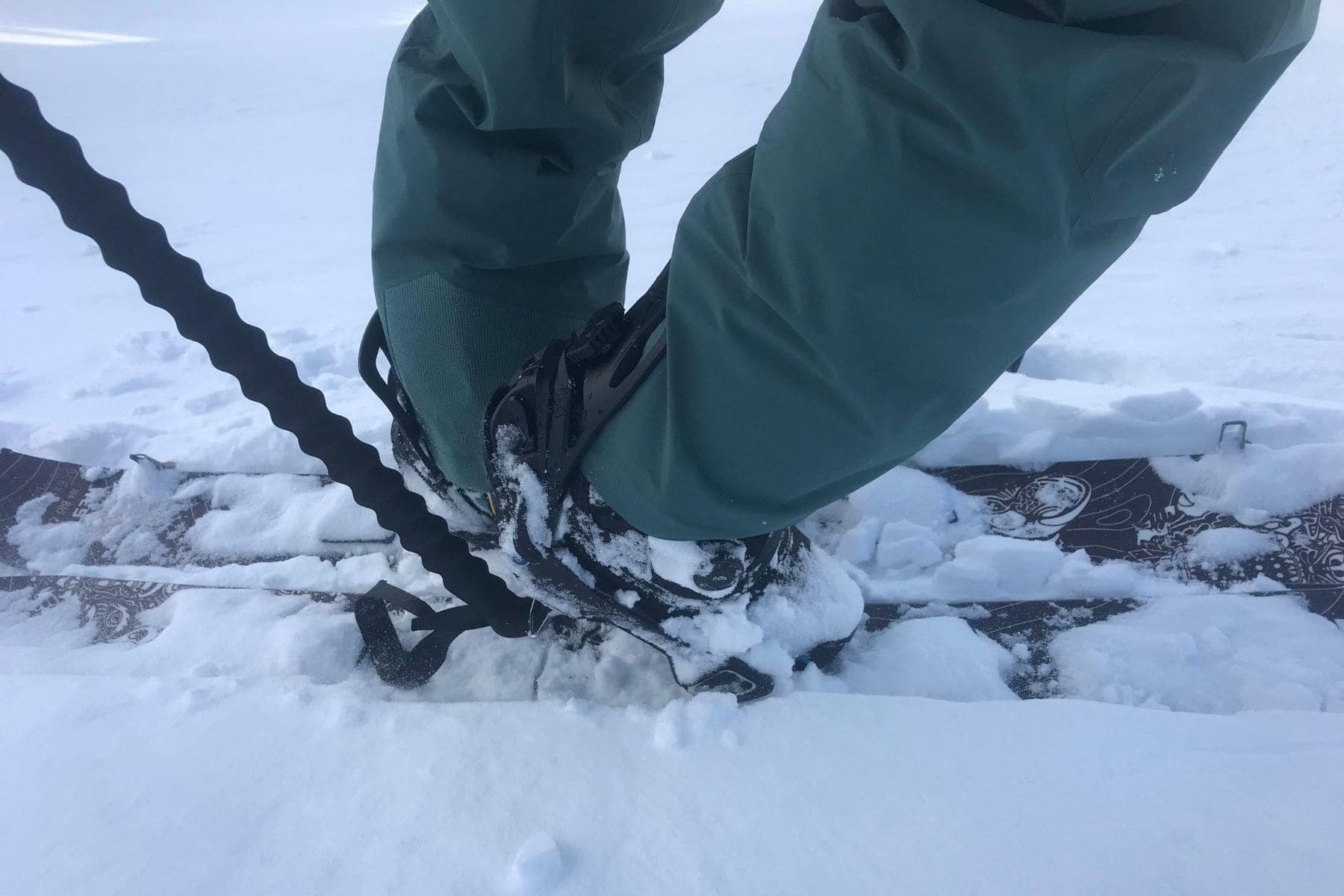
Stepping into the Burton Step On Splitboard bindings takes seconds, but that’s only if you have a nice flat spot to do so. As we know, flat surfaces are a hot commodity and a luxury that is not always available when out in the mountains.
Splitboards take us everywhere, from epic open pow fields to sheer mountain faces, so it stands to reason that not every transition will have a nice flat spot for you to ‘step on’ and go. This is not a deal breaker. It just means that you might have to get a bit creative in specific scenarios.
All in all, I am very pleased with the efficiency of these bindings. Once I got used to the release mechanism and the balance required to get in and out of the bindings efficiently, transitions got faster and easier. The three contact points provide plenty of support, and the bindings are very responsive in all conditions.
Despite being a little heavier as splitboard bindings go, the Step On Splitboard Bindings are a solid, durable, and responsive option that will go well with everything from your daily driver to your quiver’s pow slasher.
If you already have the standard solid board Step on Bindings, investing in the Splitboard version is a no-brainer, as you already have the boots for them.
Related Reviews
Things we like:
-
Quick transitions
-
No straps mean less futzing, and a lighter repair kit
-
Bindings come with spare Toe Hooks
-
Hi-back is quick and easy to adjust thanks to FLAD
-
Super clean, sleek-looking binding
-
Low profile means they store easily
Things we don't like:
-
If your feet don’t like Burton boots, your S.O.L.
-
Heavier than ski equivalent bindings
-
Wide profile in the toes could lead to tricky skinning in hard pack conditions
-
Riser bars are difficult to engage with poles


 Back
Back




Comments