Ski Expert Reveals: What Gear to Rent and What to Buy

Rental boots are a crime against humanity
There. I said it.
Someone had to!
I can spot you a mile away. You’ve been staring at a hundred different websites, and they’ve all lied to you. They’ve filled your head with nonsense about carbon fiber this and rocker-camber that.
They want to sell you a $1,200 pair of skis for your one trip a year. It’s a scam.
Let’s be honest. You’re getting ripped off. Or at least, you’re about to.
I’ve been doing this for thirty years. Thirty years of watching families spend a fortune on a ski trip just to be miserable.
And 99% of the time, the misery starts with the feet. It starts in the rental shop.
So let’s clear the air and talk about what really matters. This isn’t a blog post. This is the advice I’d give my own son, if he’d listen.
The Case for Renting (Your Skis)
Don’t buy skis.
Seriously.
It’s a waste of money for anyone who skis less than 10 days a year.
Buying skis is like buying a brand new car every single year. You drive it off the lot, and it loses half its value. The technology changes constantly.
That fancy new “Hyper-Core Graviton Inlay” you read about? It’ll be obsolete by the time you book your next flight.
Let the rental shops eat that depreciation. That’s their business.
The Ski Ad Lie
I know what you’re thinking. You’ve seen the ads.
Some guy in a tight jacket carving perfect turns through powder, and you think if you just had those skis, you’d ski like him.
You won’t.
I’m sorry to break it to you, but the skis aren’t the magic ingredient. The guy in the ad has been skiing since he was three years old. He could make a pair of two-by-fours look good.
The Real Advantage of Renting
Think about it. For your one week a year, you get to ski on a brand new pair of boards, perfectly tuned, for a fraction of the cost of owning them.
And you don’t have to lug them through the airport.
Have you ever tried to get a ski bag through baggage claim in Denver? It’s a nightmare. You’re wrestling with this seven-foot tube while everyone else glides past you with their little carry-ons.
Then you get to the resort and realize the airline dinged your edges. Now you need a tune before you even start.
When you rent, you just show up, click in, and go. When you’re done, you drop them off.
It’s the smartest move you can make.
Demo vs. Sport Packages
The kid in the rental shop will try to upsell you. He’ll talk about “Demo” packages versus “Sport” packages.
Here’s the translation:
“Sport” is the Honda Civic. It’s reliable, it’ll get you down the mountain, but it’s not exciting. The skis are a little softer, a little more forgiving. They’re designed for people who are still figuring things out.
“Demo” is the BMW. It’s higher performance, stiffer, and lets you try the latest and greatest stuff from brands like Rossignol, Salomon, or Volkl.
If you’re a confident blue-square skier who wants to push into some blacks, spend the extra $20 a day and get the demos. You’ll feel the difference.
If you’re just trying to keep up with your kids on the greens and maybe venture onto an easy blue, the sport package is fine. Don’t let them guilt you into spending more.
So, we’ve established that you’re renting your skis. Good. Smart.
But your boots? That’s a different story entirely.
Let me explain.
The Must-Own Essentials (Or, Why I Hate Rental Boots)
Renting ski boots is like borrowing a stranger’s running shoes for a marathon.
It’s insane. It’s the single fastest way to ruin your multi-thousand-dollar ski vacation.
The Problem With Rental Boots
Here’s the thing about rental boots. They’re designed to fit nobody well and everybody okay.
They’re the sweatpants of footwear.
They have to accommodate the widest possible range of feet, from the guy with narrow, bony feet to the guy with wide, flat paddles.
The result is a boot that’s loose where it should be snug and tight where it should have room. It’s a compromise, and compromises hurt.
A Story From My Shop
I had a family in here last year. The Johnsons, from Dallas.
Dad had these wide, flat feet. The kind of feet that look like they’ve been stepped on by an elephant.
Mom had perpetually cold toes, the kind of circulation issue that makes her wear socks to bed even in August.
They’d just spent a fortune to bring their two kids to the mountains for Christmas. We’re talking flights, hotel, lift tickets, ski school for the kids. Probably $6,000 all in.
Day one, they went to the big resort rental shop. The place was a zoo. A hundred families all trying to get fitted at the same time.
The 19-year-old kid working there, bless his heart, was just trying to survive. He gave them whatever boots were dry and roughly the right size. He didn’t have time to ask about foot shape or circulation. He had forty people in line behind them.
By noon, Mr. Johnson’s feet were in agony. His arches were screaming. He was getting a hot spot on his ankle bone that would turn into a blister by the end of the day.
Mrs. Johnson couldn’t feel her toes. She was convinced she had frostbite.
The kids were crying because mom and dad were in bad moods. The whole $6,000 vacation was circling the drain, and it was only lunchtime on day one.
The Fix
They came into my shop looking defeated. I’ve seen that look a thousand times.
It’s the look of someone who just realized they made a terrible mistake and doesn’t know how to fix it.
I took one look at their feet, and spent an hour with them.
We found a proper boot for the dad, one with a 102mm last to accommodate his wide forefoot. We made a custom footbed to support his collapsing arch. That alone took the pressure off his ankle.
For the mom, we got her into a boot with a warmer liner and better circulation design, and I put in a pair of heated insoles that run off a little battery pack. Cost her an extra $200, but she said it was the best money she ever spent.
The next day, I saw them on the mountain. They were laughing. Actually laughing.
The dad told me he hadn’t thought about his feet once, all day. He said it was the first time in ten years of skiing that his feet didn’t hurt.
Ten years. He’d been suffering for ten years because nobody ever told him to buy his own boots.
They didn’t just buy boots. They bought their vacation back.
Why Boots Matter So Much
Your boot is the steering wheel. It’s the gas pedal and the brake.
It’s the single point of contact between your body and your skis.
If it doesn’t fit right, you can’t steer. You can’t control anything.
Every little movement you make with your ankle and shin is supposed to translate directly into the ski. A sloppy boot absorbs all that energy.
It’s like trying to drive a car with a loose steering wheel. You turn the wheel, and nothing happens for a second. Then it overcorrects. It’s terrifying.
A boot that’s too tight is just as bad. It cuts off circulation. Your feet go numb. Then they start to hurt. Then you start to compensate by leaning back, which throws off your whole technique.
By 10 AM, you’re ready to quit.
The Solution
The hundreds of boots in a rental shop are designed to fit the average foot.
Nobody has an average foot. Your foot is unique. It has its own shape, its own pressure points, its own quirks.
Your first and most important purchase is a pair of properly fitted ski boots from a real bootfitter.
Not a teenager at a resort. A grizzled old guy like me who will spend an hour with you. Who will watch you walk. Who will measure your foot in three dimensions. Who will ask you about your skiing style, your goals, your problem areas.
It will cost you between $400 and $700. It is the best money you will ever spend on skiing. Bar none.
If you want to find a qualified bootfitter near you, check the Professional Ski Instructors of America bootfitter directory.
The Other Must-Own Gear
While you’re at it, here are the other things you buy and never, ever rent.
Helmet
Do you want to put your head in something that hundreds of other sweaty heads have been in? Something that smells like a high school locker room?
No. Buy your own.
A good helmet costs $100-$150. It fits your head. It’s clean.
And here’s the thing about helmets: they’re designed to absorb one impact. After a hard fall, you’re supposed to replace them.
Do you think the rental shop is replacing their helmets after every crash? They’re not.
Buy your own. It’s a hygiene and safety issue.
Goggles
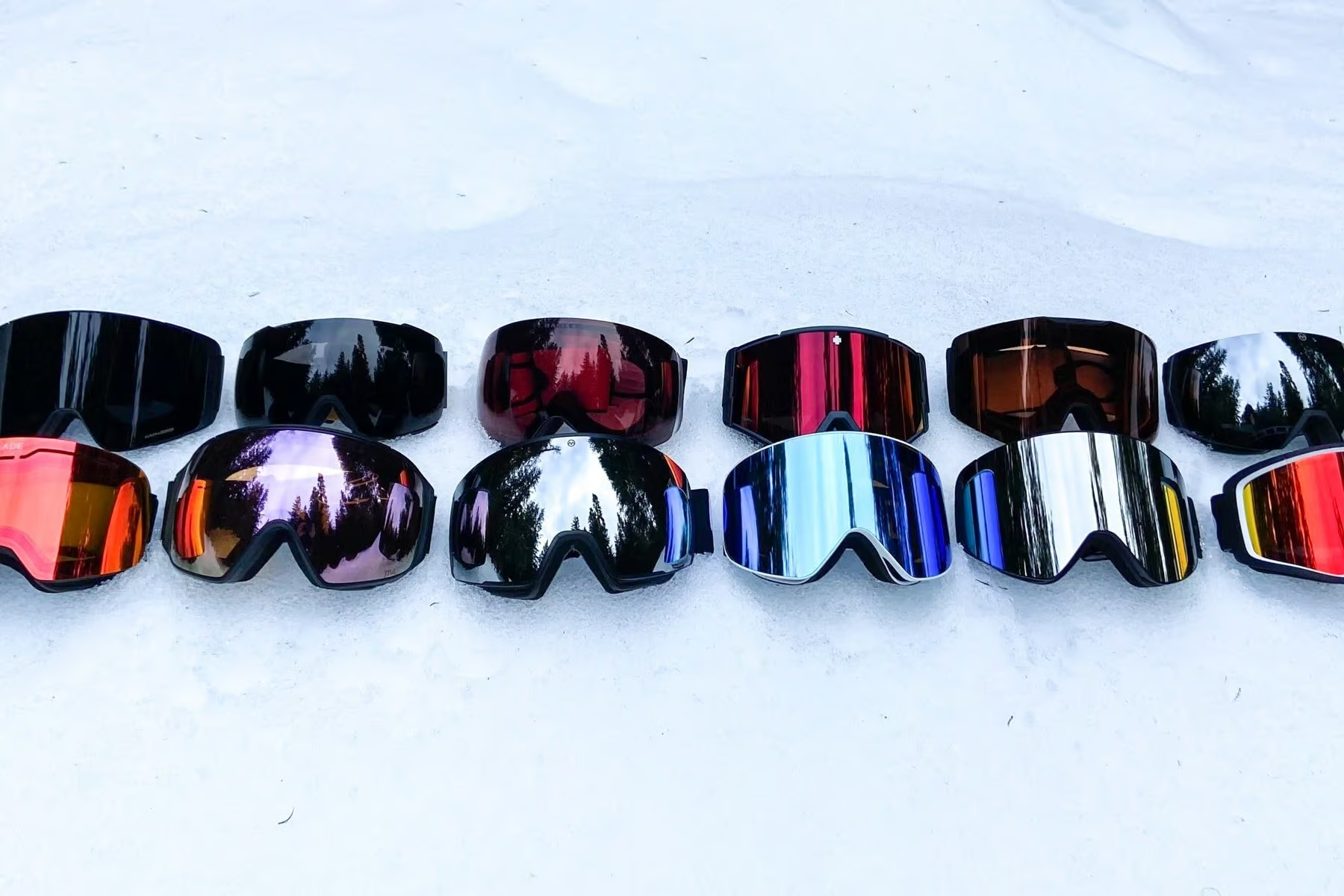
A good pair of goggles lets you see in flat light and doesn’t fog up. This is more important than you think.
On a cloudy day, or when you’re skiing through the trees, the light gets flat. Everything looks the same shade of white. You can’t see the bumps. You can’t see the edges of the trail. It’s disorienting.
A good lens with the right tint cuts through that and gives you definition.
Rental goggles are cheap, scratched to hell, and will fog up the second you start sweating. They’ll make a cloudy day impossible and a sunny day annoying.
Buy a pair with a good lens. Spend $80-$150. It’s like switching from a 1990s tube TV to a 4K flat screen.
You’ll wonder how you ever skied without them.
Gloves and Socks
These are your first line of defense against being cold and miserable. Don’t cheap out.
One good pair of merino wool socks is better than three pairs of cotton ones.
I cannot stress this enough. Cotton is your enemy.
It absorbs sweat. It holds moisture against your skin. Then it freezes. Your feet will be wet, then cold, then numb, then painful.
Merino wool wicks moisture away from your skin and keeps you warm even when it’s damp. It’s a miracle fabric. Buy two pairs. Wear one, pack one.
For gloves, get something waterproof with good insulation. Your hands are out there in the wind and the snow all day. They take a beating.
A $50-$80 pair of gloves will last you years and keep you comfortable. The cheap cotton gloves from the gas station will be soaked through by lunch.
The Cost-Benefit Analysis
Let’s look at this like a logic problem.
Say you ski 5 days a year. That’s a pretty typical family trip.
Scenario 1: You Rent Everything
- Skis and Poles: $50/day x 5 days = $250
- Boots: $25/day x 5 days = $125
- Helmet: $15/day x 5 days = $75
- Total per trip: $450
Scenario 2: You Buy the Essentials and Rent the Skis
One-Time Purchase:
- Good Boots (properly fitted): $500
- Good Helmet: $120
- Good Goggles: $150
- Good Gloves: $80
- Good Socks (2 pairs): $50
- Total Investment: $900
Per Trip Cost:
- Skis and Poles Rental: $50/day x 5 days = $250
The Numbers Over Three Trips
| Trips (5 days each) | Rent Everything | Buy Essentials |
|---|---|---|
| Trip 1 | $450 | $1,150 |
| Trip 2 | $450 | $250 |
| Trip 3 | $450 | $250 |
| Total | $1,350 | $1,650 |
Wait, Isn’t Renting Cheaper?
Yes, on a pure dollar-for-dollar basis over three years, you’re right. You save $300 by renting everything.
But that spreadsheet doesn’t have a column for “miserable, painful feet.”
It doesn’t have a column for “frostbitten ears because your rental helmet fits like a bucket.”
It doesn’t have a column for “not being able to see in a snowstorm because your goggles are fogged up and scratched.”
It doesn’t have a column for “quitting at 2 PM because you’re too cold and uncomfortable to continue.”
The extra $300 over three years is the price you pay for comfort, safety, and performance.
It’s the best insurance you can buy for your vacation. It’s $100 a year. It’s less than the cost of one nice dinner out.
And it’s the difference between a vacation you remember fondly and a vacation you try to forget.
By trip four, you’re actually saving money. And your gear will last you a decade if you take care of it.
How to Find Affordable Gear
End of season sales. March and April.
Everything is 30-50% off. The shops are trying to clear inventory before summer.
Or look for last year’s models online at sites like evo.com. The color might be different, but the technology is 99% the same.
That $600 boot from last season is now $400. It’s the same boot. It just doesn’t have the new graphics.
Your Checklist. No Excuses.
It’s not complicated. Stop reading the marketing blogs. Stop watching the YouTube reviews from guys who get free gear.
Here’s the list. This is it.
RENT THIS:
- Skis and Poles. Let someone else deal with the hassle, the tuning, the travel, and the depreciation. Get the demo package if you’re a solid intermediate. Get the sport package if you’re a beginner.
BUY THIS:
- Boots. From a real bootfitter. Not online. Not from a big box store. From someone who will spend an hour with you. This is not a suggestion. It is a command.
- Helmet. For your brain. And your dignity. And basic hygiene.
- Goggles. So you can see where you’re going. Get a lens that works in flat light.
- Good ski socks. Merino wool. Thin. One pair per day you ski. No cotton. Ever.
- Good gloves or mittens. Waterproof. Insulated. Your hands will thank you.
That’s it. That’s the whole list.
You do this, and you’ll be more comfortable. You’ll ski better. You’ll ski longer.
You’ll actually enjoy the thousands of dollars you’re spending to be here.
You’ll be able to think about the mountains, your family, the snow, the views. You won’t be thinking about your feet. You won’t be thinking about your cold hands. You won’t be squinting through scratched-up goggles.
And that is priceless.
Now get out there and enjoy the mountain.


 Back
Back